Homemade laundry soap is a thrifty, old-fashioned idea, and I have mixed my share of it. I like it for some jobs and I do not like it for others, and nobody told me the difference at the start. Here I will give you the plain facts, so you can decide whether it suits your machine and your water.
You will find a simple recipe, the places where it fails, and the safety rules that matter, because some of the ingredients are not safe around small children and pets.
Soap Is Not Detergent, and What Goes Into the Mix
This is the most important point, and many recipes skip it. Soap is made from fats and an alkali. Detergent is a different kind of cleaner, made to work in hard water and to carry away oily soil. The bar soap you grate for a homemade mix is soap, not detergent.
In soft water, soap can clean lightly soiled cotton well. In hard water, soap reacts with the minerals and makes a sticky scum. That scum can leave clothes gray, stiff, or smelling sour, and it can build up in the machine. So the same recipe that works for your neighbor may not work for you.
The ingredients and their jobs
- Bar soap. The cleaning part. Plain soap works, and so does a laundry bar. Avoid bars with heavy moisturizers or oils, since they leave residue.
- Washing soda (sodium carbonate). It softens water and helps lift dirt. It is not the same as baking soda.
- Borax. A mineral that boosts cleaning and helps with odors.
None of these ingredients is a modern detergent. They do not contain the enzymes that break down protein and grease stains, and they do not fight hard water on their own. Think of the mix as a plain, mild washing powder, not as a replacement for everything on the store shelf.
Safety First
Washing soda and borax are not harmless pantry items.
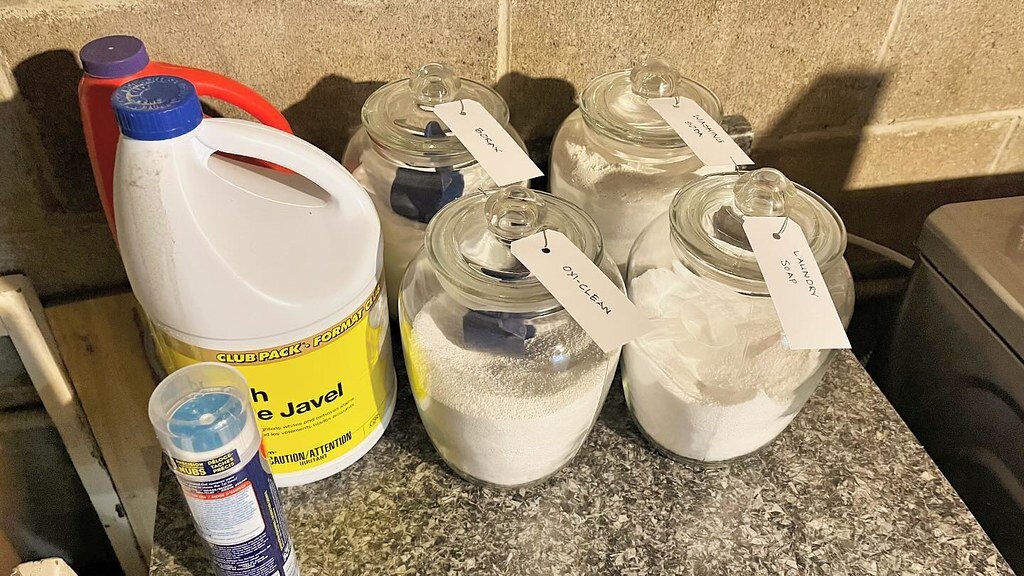
- Keep both in a high cabinet, out of reach of children and pets, and in their original labeled boxes or clearly marked jars.
- Never store them in a food container or a drink bottle.
- Wear gloves and avoid breathing the dust when you mix. Keep powder out of your eyes. Wash your hands afterward.
- If a child or a pet swallows any, call poison control or a veterinarian right away.
- Mix them in a ventilated space, and never combine laundry products with bleach.
A Simple Powder Recipe
You need a grater, a mixing bowl, a dry jar with a lid, and a tablespoon that you keep only for laundry and never use for food. This is the plain version I use for small, light loads.
- Grate one bar of plain soap (about 5 ounces) on the fine side of a grater. Let the shreds dry for a day if they feel damp.
- In a bowl, stir together the shreds, 1 cup of washing soda, and 1 cup of borax.
- Store the mixture in a labeled, tightly closed jar.
- Use about 1 tablespoon for a small load and 2 tablespoons for a large one.
- Dissolve the powder in a cup of hot water first, then add it to the drum. Powder dropped into cold water can leave clumps.
For the best result, wash in warm water, do not overfill the machine, and add a pinch less powder than you think you need, and test the mix on an old, small load first.
Where It Works and Where It Does Not
It works on:
- Lightly soiled everyday cotton, towels, and bedding
- Soft-water homes
- Top-loading machines with plenty of water
It does not work well on:
- Heavily soiled work clothes, grease, and sweat stains
- Hard-water homes, where it leaves residue
- Cold-water washing, since soap does not dissolve properly
- Synthetic workout clothes, which hold oils
For stains, I use a separate pre-treatment of liquid detergent or an oxygen bleach soak, and then wash as usual. Homemade soap does not replace stain treatment. Always check the care label first, and test the mix on a hidden spot of any colored or delicate item, because washing soda is alkaline and can dull some dyes and harm wool and silk.
High-efficiency machines
Before you make a large batch, look in your machine’s manual for what the maker recommends, and make only a small jar for your first trial. High-efficiency (HE) washers, both front-loading and some top-loading models, use very little water. Homemade soap does not rinse out well in that small amount of water, so residue can collect on the drum, in the hoses, and in the door seal. It can create a sour smell and mold. Many machine makers advise using only detergent labeled for HE machines, and using something else may affect your warranty. If you own an HE washer, I would buy HE detergent and save the homemade soap for hand-washing or for an old agitator machine.
Check for Residue
Residue is the honest weakness of any soap-based mix, so it is worth checking early instead of finding out after a month of dull laundry. After a few loads, do the towel test. Wash a white towel, then feel and smell it. If it is stiff, gray, or musty, the soap is staying behind.
To fix it:
- Use less powder, since most people use too much.
- Add a half cup of white vinegar to the rinse dispenser only, never mixed into the soap in the wash step, because vinegar can undo soap’s cleaning action. Never use it together with bleach.
- Run an empty hot cycle now and then to clear buildup.
If towels still feel rough, line-drying can add to the stiffness, and a short tumble helps. I discuss ways to hang and soften laundry in line-drying laundry in every season.
Quick-Fire FAQ
Is homemade laundry soap cheaper than store detergent?
Often, yes, if you already use bar soap. The savings disappear if it harms your clothes or machine.
Can I use it in a front-loading washer?
I advise against it. Low water levels leave residue, so use HE detergent.
Is borax safe to handle?
It irritates skin and eyes and is harmful if swallowed. Use gloves and keep it away from children and pets.
Why do my clothes look gray?
Soap scum from hard water or too much powder is the usual cause. Use less and rinse with a little vinegar.
— Grandma Gigi