Starting tomatoes from seed costs a few dollars instead of the price of a tray of plants, and it lets you grow varieties that the garden center never sells. It also asks for a little patience and a little care. Most seedling problems come from three things: starting too early, too little light, and too much water.
In this guide you will learn what to buy, when to sow, how to give seedlings enough light on or near a windowsill, and how to move them outdoors without shock. Everything here works in a plain house with no special equipment.
What You Need
- Tomato seed. Fresh packets germinate best, but seed that is a few years old is often still good.
- Seed-starting mix. This is a light, fine mix made for seedlings. Do not use soil dug from the garden, because it packs hard, drains badly and can carry disease.
- Clean containers with drainage holes. Small pots, cell trays, or cut-down milk cartons all work. Wash used containers in hot soapy water before use.
- A tray or saucer under the containers, to catch water.
- Plastic wrap or a clear lid, to hold moisture until the seeds sprout.
- Plant labels. Write the variety name and the sowing date. You will not remember otherwise.
When and How to Sow
Count back six to eight weeks from your average last spring frost date. Starting earlier than that gives tall, weak plants that outgrow their pots before the weather allows planting. If you do not know the date, your county extension office can tell you. If your summers are brief, the list of vegetables for a short growing season shows what to grow beside your tomatoes.
- Wet the seed-starting mix until it feels like a squeezed-out sponge, then fill the containers.
- Press two or three seeds into each container, about one quarter inch deep, and cover them lightly.
- Cover the tray with plastic wrap or a clear lid.
- Put it somewhere warm. Tomato seeds sprout best at about 70 to 80 degrees F, and most sprout in five to ten days. The top of the refrigerator or a spot near, but not on, a radiator often works.
- Check daily. As soon as green shoots appear, remove the cover and move the tray into the brightest place you have.
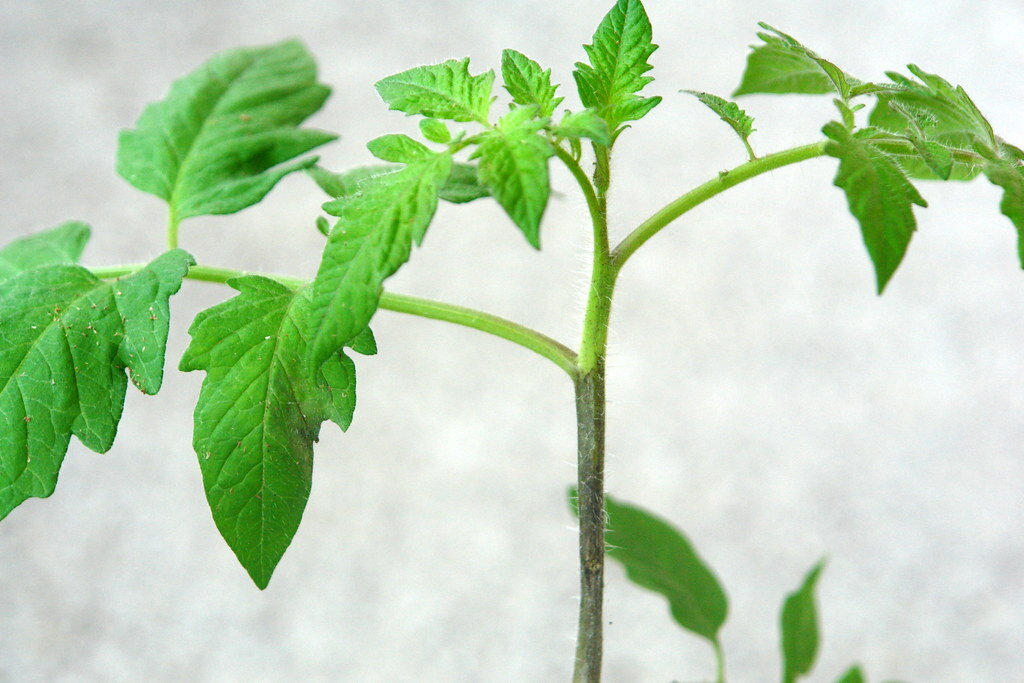
When the seedlings have their first true leaves, which are the jagged, tomato-shaped leaves that come after the two round seed leaves, thin each pot to the single strongest plant. Cut the extra seedlings at soil level with scissors, so you do not disturb the roots of the one you keep.
Light, Water and Air
A south-facing window is the best natural light you can offer, but in early spring even that is often weak. When seedlings stretch toward the glass with long, thin pale stems, the plants are asking for more light. A plain shop light or a small LED grow light placed two to three inches above the leaves, and left on for 14 to 16 hours a day, solves the problem. Raise the light as the plants grow. Turn pots a quarter turn each day if you use only the window.
Water from the bottom. Pour a little water into the tray, let the mix soak it up for 20 or 30 minutes, then empty what remains. The surface should feel barely damp, never soggy. A fan blowing gently across the plants for a short time each day, or brushing your hand lightly over the tops, makes the stems thicker and stronger.
Once seedlings have two sets of true leaves, feed them every week or two with a liquid fertilizer mixed at half the strength on the label. Seed-starting mix holds few nutrients, so plants run out of food after a few weeks.
If the roots fill the pot before it is time to plant outside, move the plant into a larger container. Tomatoes can be buried deeper than they grew before, up to the first set of leaves, because the buried stem grows new roots.
Moving Outdoors
Seedlings raised inside are tender. Before planting, they need to be hardened off, which means getting used to sun, wind and cooler air over about a week to ten days.
- Day one and two: put them in shade, out of wind, for an hour or two.
- Day three and four: give them morning sun and bring them in by late afternoon.
- Day five to seven: leave them out longer in more sun.
- Last days: leave them out all day, and overnight if the temperature stays above 50 degrees F.
Plant outdoors only after the last frost, when the soil is at least 60 degrees F and nights stay above 50 degrees F. Set the plant deep, with the lowest leaves just above the soil. Choose a spot with full sun, and think about what will grow beside it. Basil is a classic neighbor, and I describe the reasoning in companion planting basics.
When Things Go Wrong
- Seedlings fall over at the soil line. This is damping-off, a fungal disease caused by wet mix, dirty containers or poor air. Affected seedlings cannot be saved. Start again with clean containers and fresh mix, water less and give more air.
- Tall, thin, pale seedlings. The light is too weak. Move the light closer or lengthen the daily hours.
- No sprouting after two weeks. The mix may be too cold or too wet, or the seed may be old. Warm the tray and wait a few more days before sowing again.
- Purple leaves. Often just cold, but if growth is slow, feed lightly.
Do not start tomatoes if you cannot give them light and will not be home to water them. A healthy store-bought plant is a better choice than a poor seedling.
Quick-Fire FAQ
Can I start tomato seeds on a windowsill without grow lights?
You can, in a bright south-facing window, but the plants will likely be taller and weaker than those under a light. Rotate them daily and sow a little later so they spend less time indoors.
How long do tomato seeds take to sprout?
Most sprout in five to ten days when kept at 70 to 80 degrees F. Cooler rooms can double that time.
When should I put tomato seedlings in the garden?
After the last frost date, once the soil is about 60 degrees F and nights are above 50 degrees F. Harden them off first.
Do I have to use special soil to start seeds?
Yes, a seed-starting mix is best. Garden soil is too heavy for tiny roots and may carry disease.
— Grandma Gigi